Mystery Portrait of Victorian Butler to Feature in Wentworth Woodhouse Exhibition
About
A remarkable portrait of a Victorian-era butler, discovered after spending decades hidden in a family attic, is set to take pride of place in a new exhibition celebrating the lives of servants and estate workers at Wentworth Woodhouse.
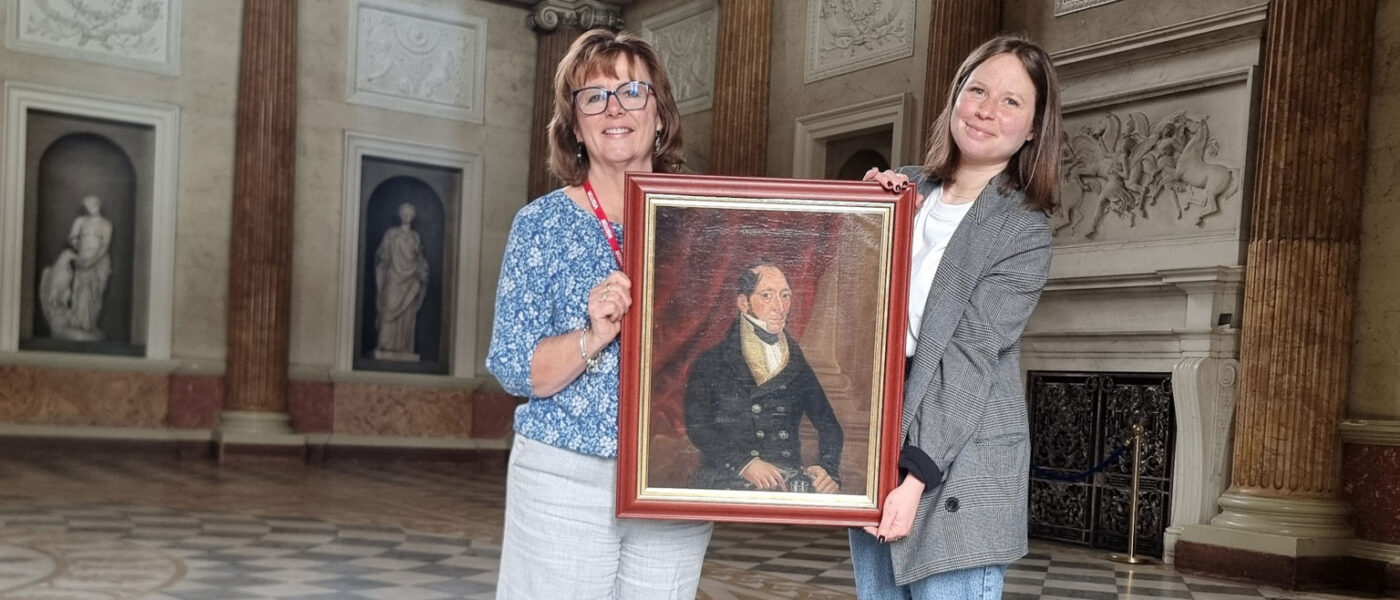
The painting depicts William Denton, a long-serving member of the Wentworth Woodhouse household staff. Despite extensive family research, the identity of the artist and the reason behind the commission remain unknown, adding an intriguing mystery to the story.
Historic Portrait Returns to Wentworth Woodhouse
Visitors to Echoes of the House: Stories in Light and Motion, opening on 7 July, will have the opportunity to view the striking oil portrait of William Denton. Thought to date from the late 1850s, the artwork shows Denton dressed in Wentworth Woodhouse livery, standing beside imposing stone pillars.
The portrait was submitted to Wentworth Woodhouse Preservation Trust after a public appeal for memories, photographs and artefacts connected to servant and estate worker life at the historic house.
Victoria Ryves of Wentworth Woodhouse Preservation Trust explained that portraits of working-class individuals from this period are uncommon.
While wealthy families often commissioned paintings or embraced the emerging technology of photography, ordinary workers were rarely documented in such a personal way. As a result, the portrait offers a rare glimpse into the life of a servant who spent decades working within one of Yorkshire’s most significant country estates.
A Family Treasure Hidden for Generations
The painting has remained within the Denton family for generations and is now owned by William Denton’s great-great-grandson, Don Rose, aged 85, from Hoyland Common.
The artwork was originally inherited by Don’s father, Harry Denton Rose, from his mother. However, family members were reluctant to display it for many years.
According to Don, the portrait spent decades in an attic because his mother felt that William’s eyes appeared to follow her around the room. When the painting eventually passed into Don’s care, he arranged for it to be cleaned, reframed and displayed in his home.
Although a signature appears on the cork of a wine bottle shown in the painting, it has proved impossible to identify. Previous assessments suggested the work may have been created by a visiting artist, but its sentimental value to the family far outweighs any monetary worth.
The Life and Career of William Denton
Research carried out by William Denton’s great-great-great-granddaughter, Sheryl Hadfield, has revealed a detailed picture of his life and career.
Born in 1801, William was the son of an estate worker and is believed to have started his service with the Fitzwilliam family as a boot boy at around 14 years of age.
Over the years, he steadily progressed through the household ranks:
- Started as a boot boy in his teenage years.
- Advanced to the role of footman.
- Became a butler serving the 5th Earl Fitzwilliam.
- Travelled with the family to residences in Belgravia, London, and Northamptonshire.
- Earned £35 per year as a butler by 1857.
William married twice and fathered six children. Following a lengthy career in service, he retired and died in Wentworth in 1874.
A Window into Victorian Service Life
For descendants of William Denton, the portrait represents far more than a family heirloom. It provides a tangible connection to a man whose working life offered opportunities and experiences that would have been unusual for many people of his social standing.
Sheryl Hadfield believes William’s role would have exposed him to influential figures and important events of the period. As a trusted member of the household staff, he may have witnessed significant discussions and entertained distinguished guests visiting Wentworth Woodhouse.
She also notes a strong family resemblance when looking at the portrait, seeing similarities to both her grandfather and father.
The inclusion of the painting in the exhibition brings William’s story full circle, returning him to the house where he spent much of his working life.
About Echoes of the House: Stories in Light and Motion
Funded by Arts Council England, Echoes of the House: Stories in Light and Motion explores the experiences of the thousands of servants, workers and estate employees who helped maintain Wentworth Woodhouse and its surrounding estate.
The exhibition will run until November and will showcase personal stories, artefacts and newly collected historical information relating to the people who kept the estate operating across generations.
All research and materials gathered as part of the project will be preserved within the Wentworth Woodhouse archives, ensuring these stories remain accessible for future generations.
Exhibition Information
- Exhibition: Echoes of the House: Stories in Light and Motion
- Location: Wentworth Woodhouse, Rotherham
- Opening Date: 7 July
- Duration: Until November
- Funding: Arts Council England

Similar events

Viking North: Major Exhibition at Yorkshire Museum
How to Train Your Dragon School Exhibition at DIG York
Making Waves: The Art of Japanese Woodblock Print at York Art Gallery